
Winter Solstice: Myth, Lore & the Grit Behind the Longest Night
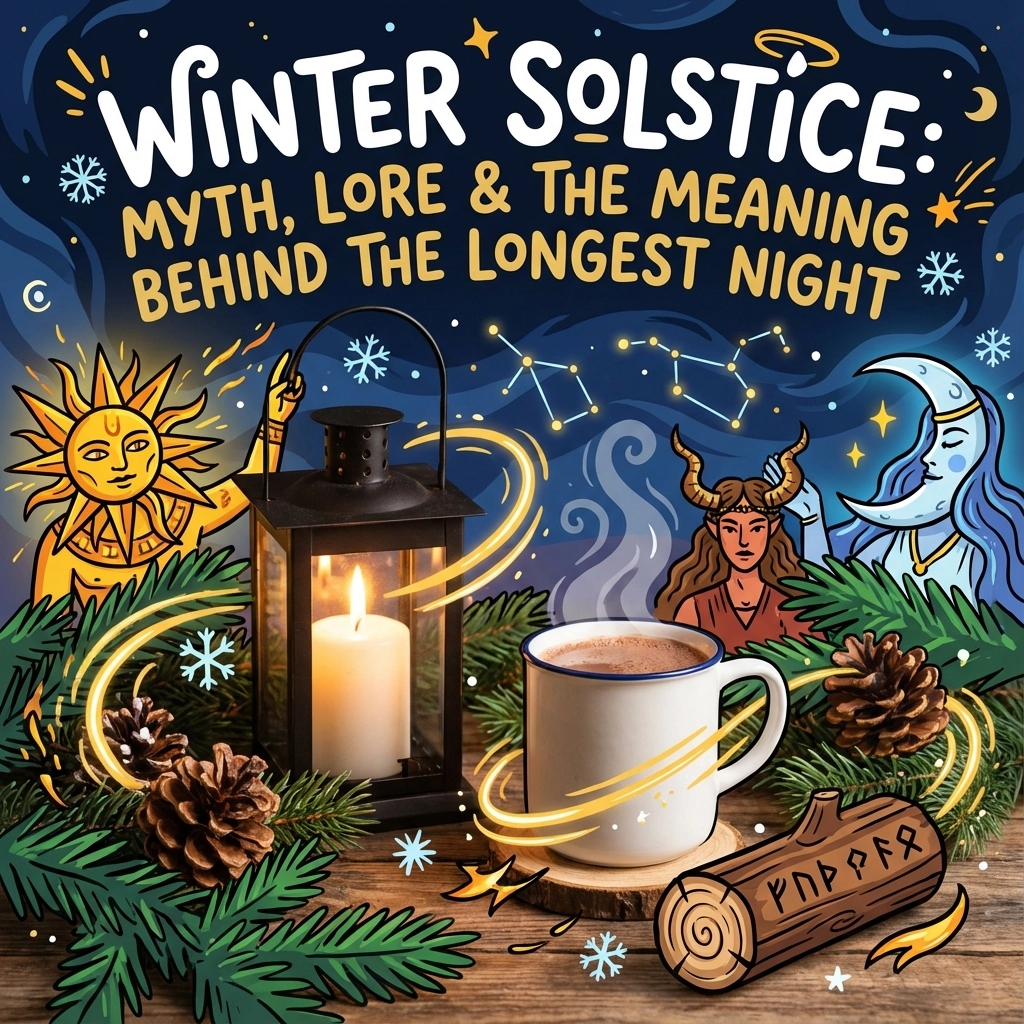
Modern life is loud—notifications barking, bills piling, news feeds throwing elbows. We grind, we scroll, we call it “busy,” and wonder why our shoulders feel bolted to our ears. Then the solstice rolls in and slams the brakes. Shortest day. Longest night. The planet tilts away like it’s had enough, and we finally notice the dark pressing at the window.
Picture it: you’re parked by a crackling fire on December 21st, and outside, winter’s got everything in a chokehold. The sun barely bothered to show today, and tomorrow? Who knows. That was the annual fear-buzz for our ancestors—no app to check, just sky, cold, and gut instinct.
The winter solstice—longest night, shortest day in the Northern Hemisphere—has been freaking people out and firing up wild stories for thousands of years. And honestly? The myths, legends, and rituals that rose up around this cosmic pivot are better than Netflix and cheaper than therapy. Let’s wade in and keep it real.
When the Sun Went Missing: Norse Drama, No Safety Net
Start with the Vikings—they didn’t do lukewarm. In Norse myth, the solstice isn’t a calendar note, it’s the knife-edge between light and dark, with the world on the line. No soft lighting, no feel-good soundtrack—just stakes.
They even called it “Mothers’ Night,” believing goddesses were birthing light in the deepest dark. Meanwhile Sol, the sun goddess, is getting hunted across the sky by Sköll, a giant wolf with one job: eat the sun. As the days shrink, it looks like the mutt’s catching up. You can feel the breath-in-the-cold-air tension.
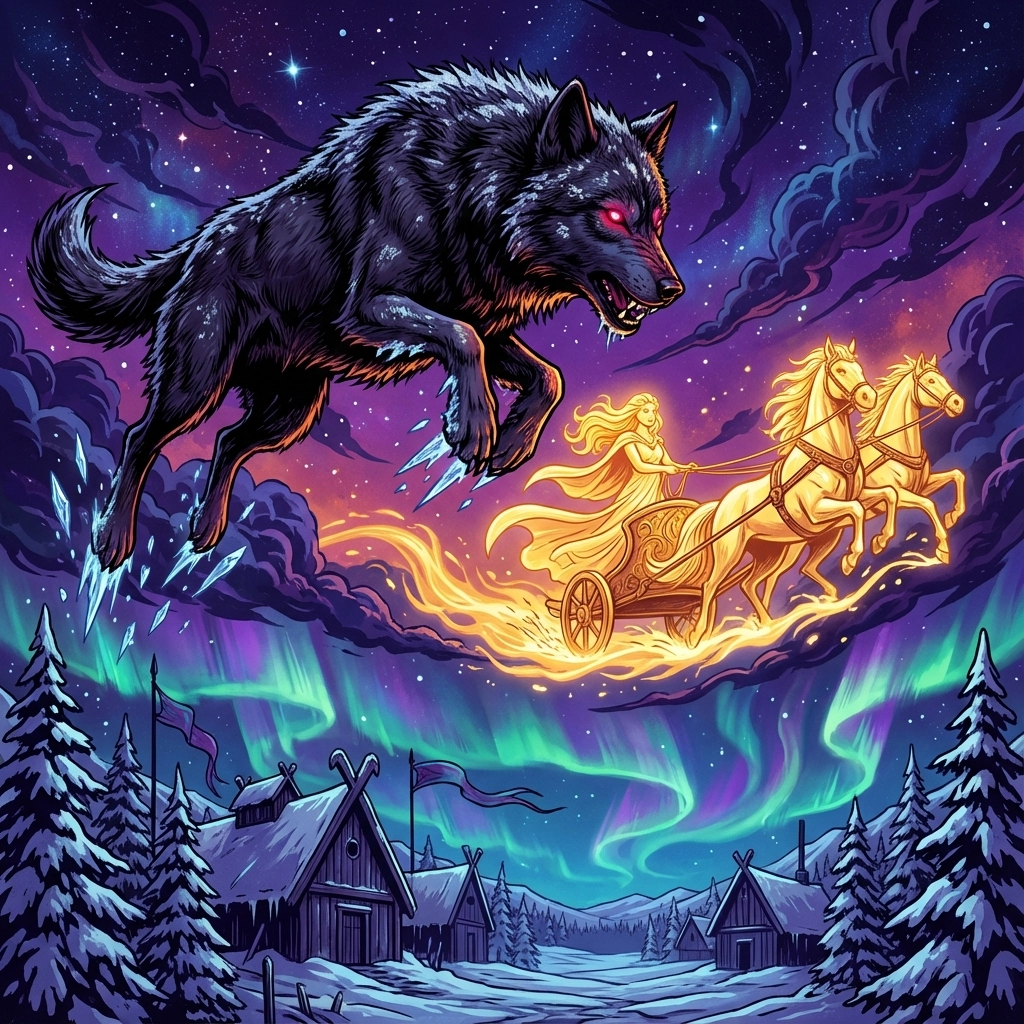
Here’s the twist of the knife: during Ragnarök (yep, the whole-apocalypse package), Sköll finally gets her. But not before Sol births a daughter who keeps the lights on afterward. The solstice felt like a trailer for that comeback—a promise that even when the dark wins a round, light’s already on deck.
They marked it with Yule: twelve days of fire, feast, and stubborn hope. Massive logs burned all night. If the flame died? Bad omen for the year. No pressure—just the whole village counting on your fire-keeping.
Divine Births and Solar Babies: Same Story, Different Tribes
Here’s the wild part: cultures that never swapped a postcard landed on the same theme—light is born in the dark. It’s like our species was hardwired for the story.
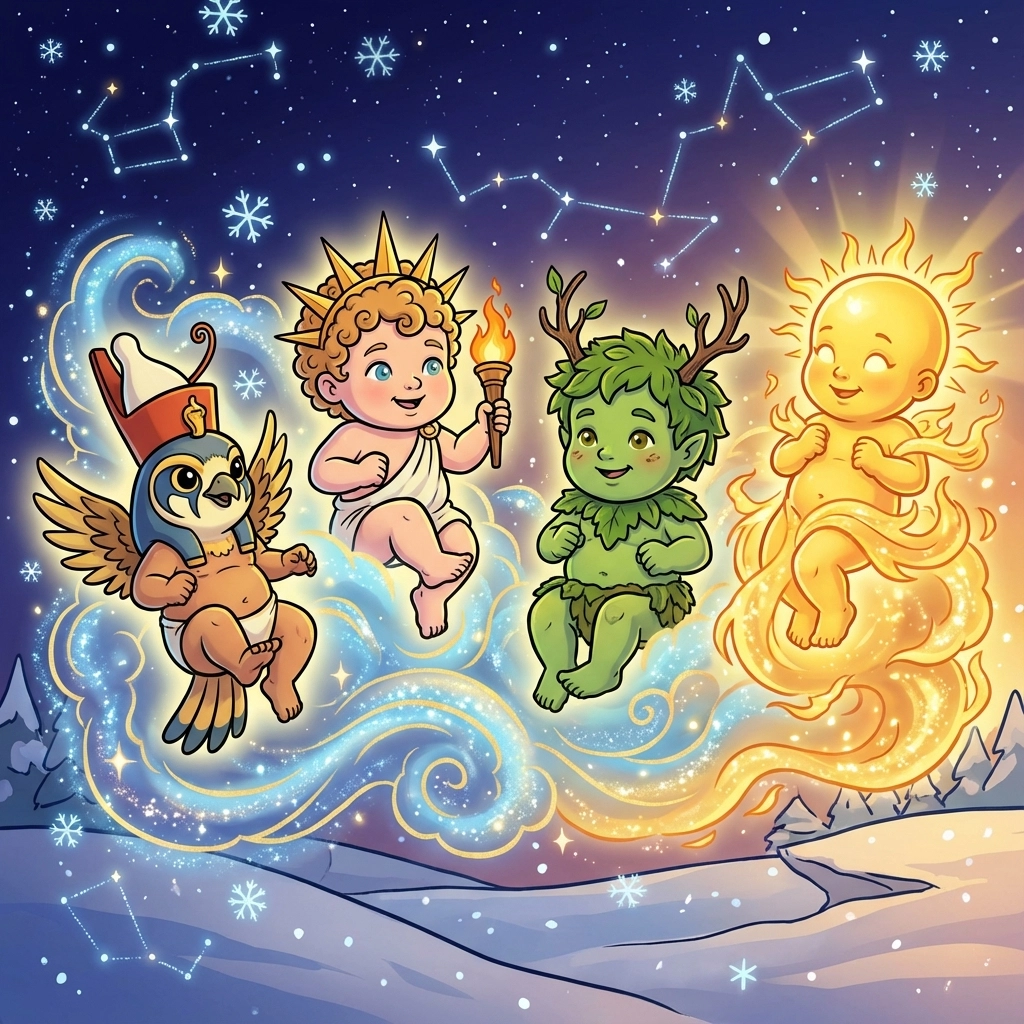
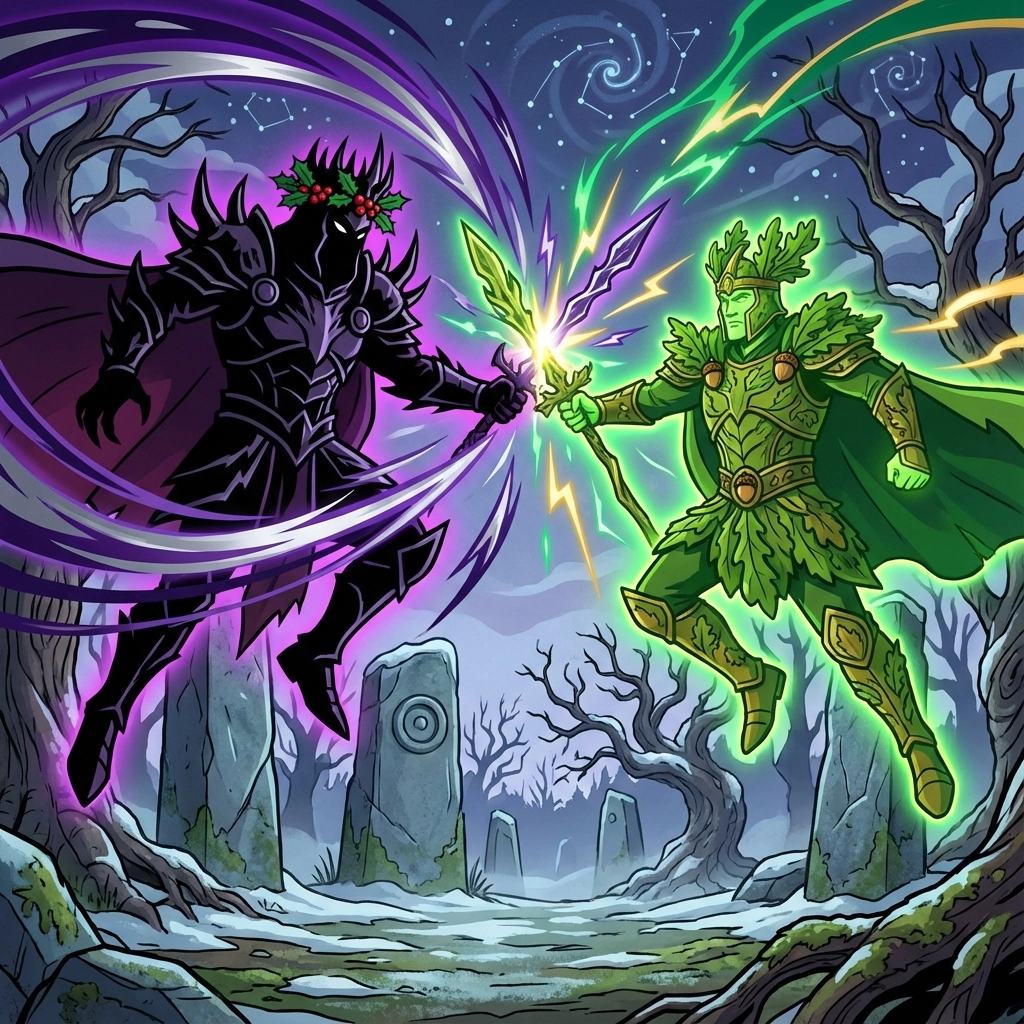
In Egypt, Isis births Horus at the solstice—the golden child who stands up to the shadows. Not random timing; his arrival echoed life coming back to the Nile. The Romans rolled with Mithras, the “Unconquered Sun,” celebrated on December 25th. That party was such a hit the early Christians eventually circled the same date. Across the Celtic world, the Oak King beats the Holly King at solstice—code for the light staging its comeback and the days stretching out again.
When Witches Jacked the Sun: Finnish and Celtic Chaos
Not every tradition went with the “miracle baby” vibe. Some went full metal. In Finnish lore, the witch-queen Louhi straight-up kidnaps the sun and moon, locks them in a mountain, and throws away the key. Try tucking a kid in after that bedtime story. “Why is it dark?” “A scary aunt stole the sky, champ.”
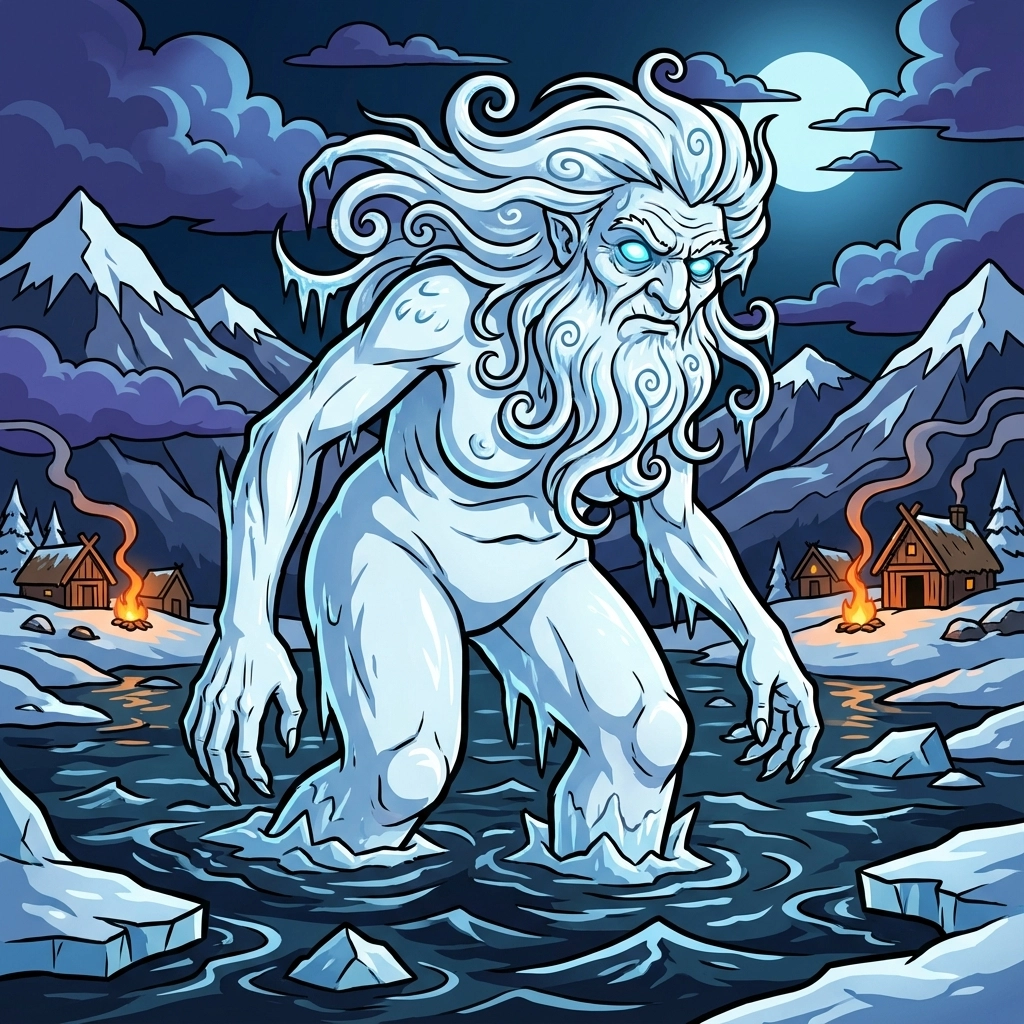
Up in the Scottish Highlands, there’s Cailleach—the winter hag so big the ocean’s a puddle to her. She drags winter in her wake, white hair whipping rivers into ice. Folks carved her into logs and burned her image—to smoke out the cold and call the sun back.
And then things get gremlin-level weird. The Greeks warned about the Kallikantzaros—hairy little chaos goblins who spend most of the year sawing at the World Tree underground. During the deep dark, they scramble topside to prank, spook, and wreck shop until the returning sun drives them back down. Mischief season, unlocked.
Light vs. Dark: The Celtic Title Fight
Celtic myth turns the solstice into a title bout: Holly King vs. Oak King, every year, no tap-outs. Holly rules the dark half; Oak commands the light. At solstice, they clash—and Oak takes the win, signaling the climb back toward spring.
It’s not just a pretty story. It’s a frame for the whole mess of life: light and dark, death and rebirth, loss and return. You don’t skip the hard part—you move through it. That mindset carried communities through the worst weeks of the year and into planting season.
Fire, Sap, and Superstition: How People Actually Survived
Our ancestors didn’t just sit around swapping spooky stories—they did things. Call it sympathetic magic, call it stubborn optimism. Build fire, call the sun. Make light, invite more of it. Every bonfire was a signal flare: we’re still here, keep coming.
They hauled evergreens inside for more than decoration. When everything else went brown and brittle, pine and fir stayed fierce and green. People treated that as bottled life-force—protection, blessing, grit that rubs off on a household. Touch the sap, smell the resin, feel the rough bark—there’s your winter medicine.
Holly was “royal” and protective—druids said it blocked bad spirits and sheltered faeries (the helpful kind, if you kept on their good side). Mistletoe? Next-level. But harvesting it was serious business—strict timing, ritual, and respect. Not cute-kissing lore—old power with rules.
Sun Sisters and Solar Queens: Not All Suns Were “He”
Modern culture often defaults to He/Him Sun, She/Her Moon—but plenty of old-school worlds flipped that script. In southern Arabia, she was Atthar. In Mesopotamia, Arinna, queenly and bright. To the Inuit, Sun Sister. To the Vikings, Sol. Different language, same punchline: the light we rely on often wore a crown, not a helmet.
That lens changed the vibe: less conquest, more care. Birth, warmth, return. The longest night wasn’t only about gritting your teeth—it was about tending the spark so something new could be born. That’s a different kind of tough.
Why This Still Matters: We Still Stare Down Long Nights
Why should we care? Because the solstice isn’t a museum piece—it’s a mirror. We still know long nights. Money gets tight, relationships fray, bodies ache, headlines spiral. The human part hasn’t changed; we just swapped wolves for work emails and crop failure for supply chains.
Our ancestors didn’t make myths for kicks. They built mental tools—stories that turned dread into a plan. Gather people. Light a fire. Say the words out loud. Do the small rituals that tell your nervous system, “We’re not done yet.” That’s not superstition—that’s survival psychology with better costumes.
We might not fear the sun ghosting us, but we’ve lost some of the simple ways to carry each other through the dark. Solstice traditions remind us the night is a tunnel, not a wall. So we stack kindling, we share food, we laugh too loud, and we keep a stubborn flame going—because that’s how you meet the dawn.
Make Your Own Solstice Ritual (No Robes Required)
Maybe you’re here for the Viking brawl, the Celtic title fight, or just the basic human urge to make a little light when the world goes dim. Good. Pick your flavor and make it yours.
This year, don’t just tick the date. Light a fire (candle counts), drag a bit of green inside, call a few people you actually like, and mark the turn. You don’t have to make it fancy—just make it honest. The longest night isn’t a threat; it’s a hinge.
If our Viking forebears could stare down the possibility of cosmic collapse with stories, flame, and fierce community, you and I can handle whatever this season throws at us. See you at the fire—bring matches.