
Unwrapping the Pagan Roots of Your Favorite Christian Holidays
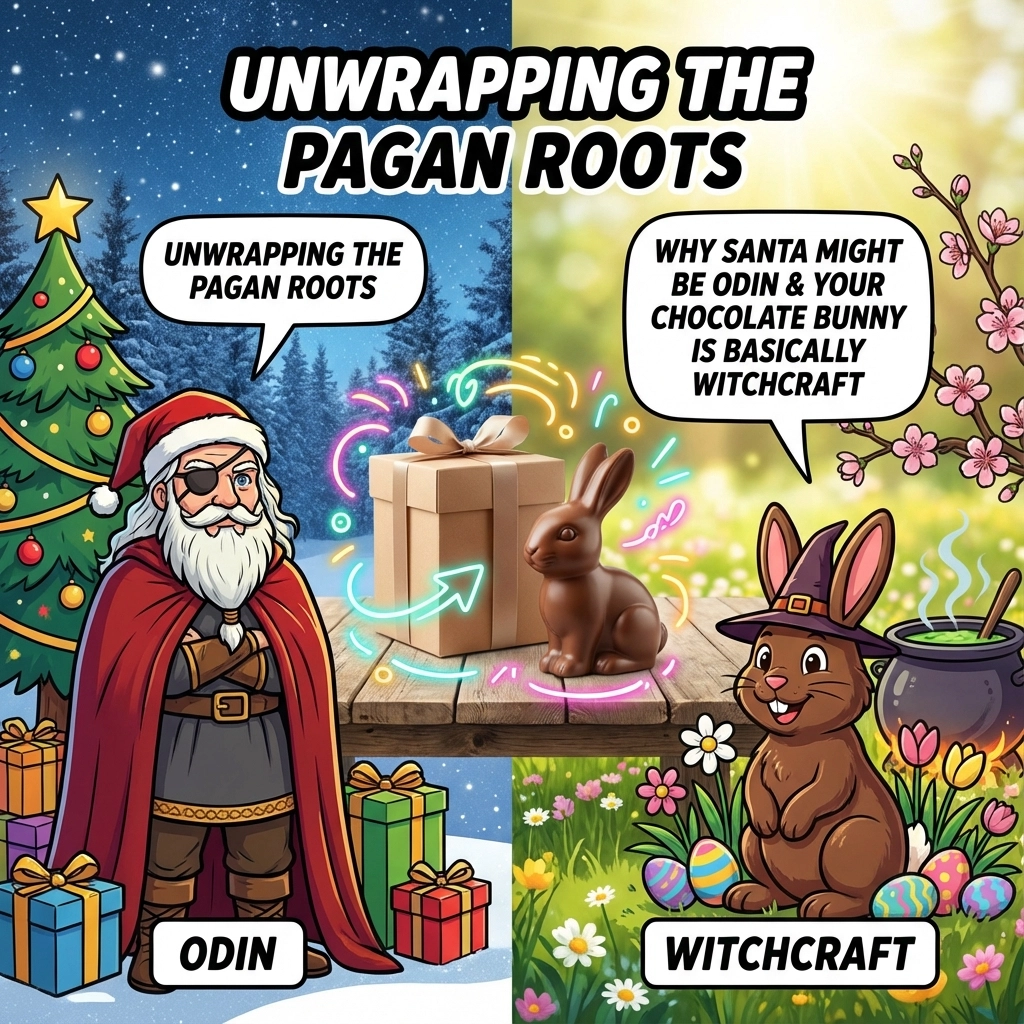
Okay, so here's the thing that's been eating at me ever since I fell down this rabbit hole of pagan-Christian holiday connections last week. You know how every December, your weird uncle starts going on about how Christmas is "actually" a pagan holiday? Well... he's not entirely wrong, but he's also not entirely right, and the real story is way more fascinating than either the "Christians stole everything!" crowd or the "that's just coincidence!" people want to admit.
I've been digging through historical sources, cross-referencing dates, and trying to separate actual documented history from the kind of internet mythology that makes everything sound like an ancient conspiracy. And what I found is this beautiful, messy tapestry of religious evolution that's part strategic adaptation, part genuine coincidence, and part, yeah, okay, some pretty obvious borrowing.
The Santa-Odin Connection (And Why Your Christmas Tree Might Be More Viking Than You Think)
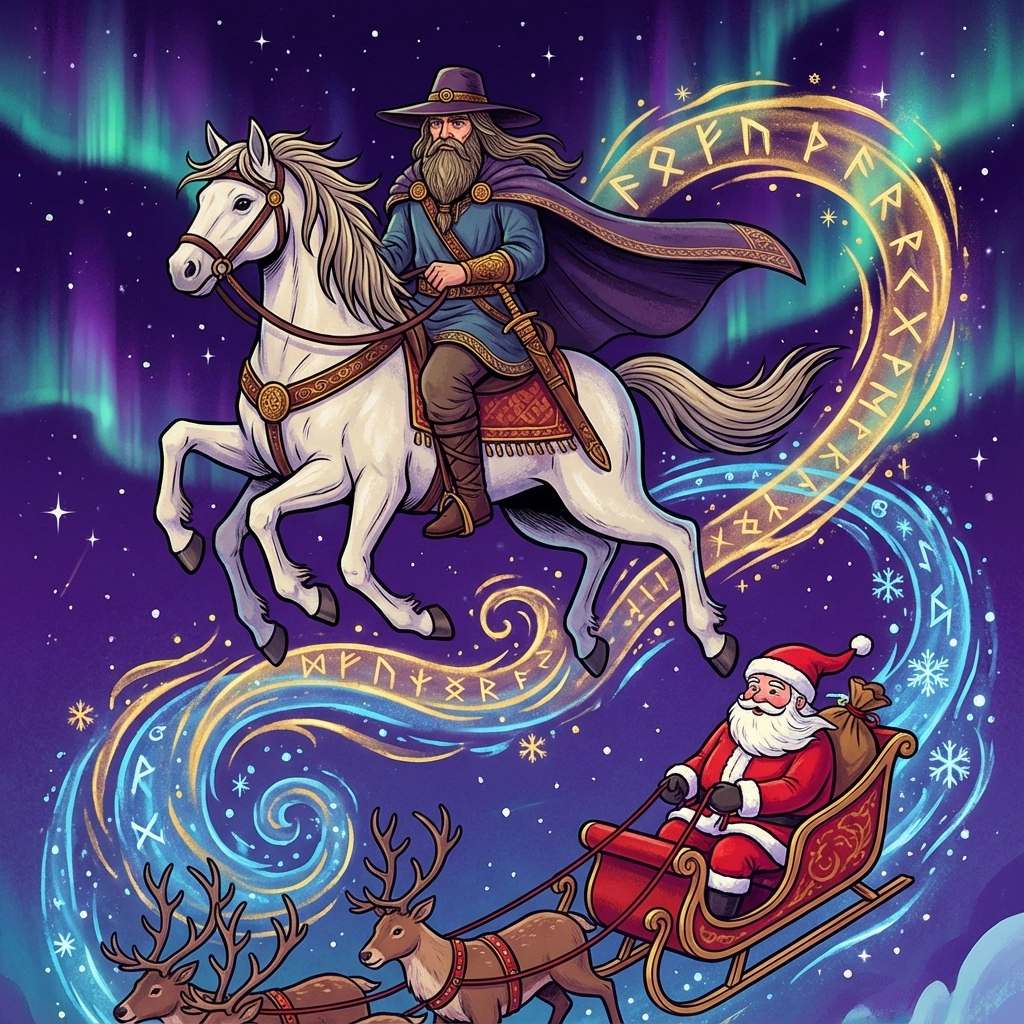
Odin, the All-Father of Norse mythology, had this eight-legged horse named Sleipnir that could fly through the nine realms. During Yule, the Norse winter solstice celebration, Odin would lead the Wild Hunt across the sky. Kids would leave their boots filled with carrots and hay for Sleipnir, and Odin would reward them with gifts or treats. Sound familiar?
The modern Santa we know is definitely influenced by Saint Nicholas, a 4th-century bishop famous for secret gift-giving. But with Christianity spreading into Germanic and Scandinavian territories, the Church didn't erase old traditions—they blended them. Saint Nicholas got mixed up with local figures, and sometimes kept riding a horse instead of reindeer.
That Christmas tree? Pure Germanic paganism. Bringing evergreens indoors goes back to fertility rituals celebrating life enduring winter. Christianity re-cast it as a symbol of eternal life through Christ.
If you want Santa’s darker cousin, meet Krampus: horned, shaggy, and absolutely not HR-approved. He stalks the streets with birch rods on Krampusnacht, dishing out consequences to the naughty and sharing the spotlight with St. Nick. Meanwhile, Frau Perchta in Alpine marches does surprise winter inspections, and in southern Italy, Epiphany brings La Befana—a kindly witch who leaves presents on January 6th. Midwinter needed guardians and givers. Christianity didn’t scrap the cast; it recast them for the new show.
Easter: When Chocolate Bunnies Meet Ancient Goddesses
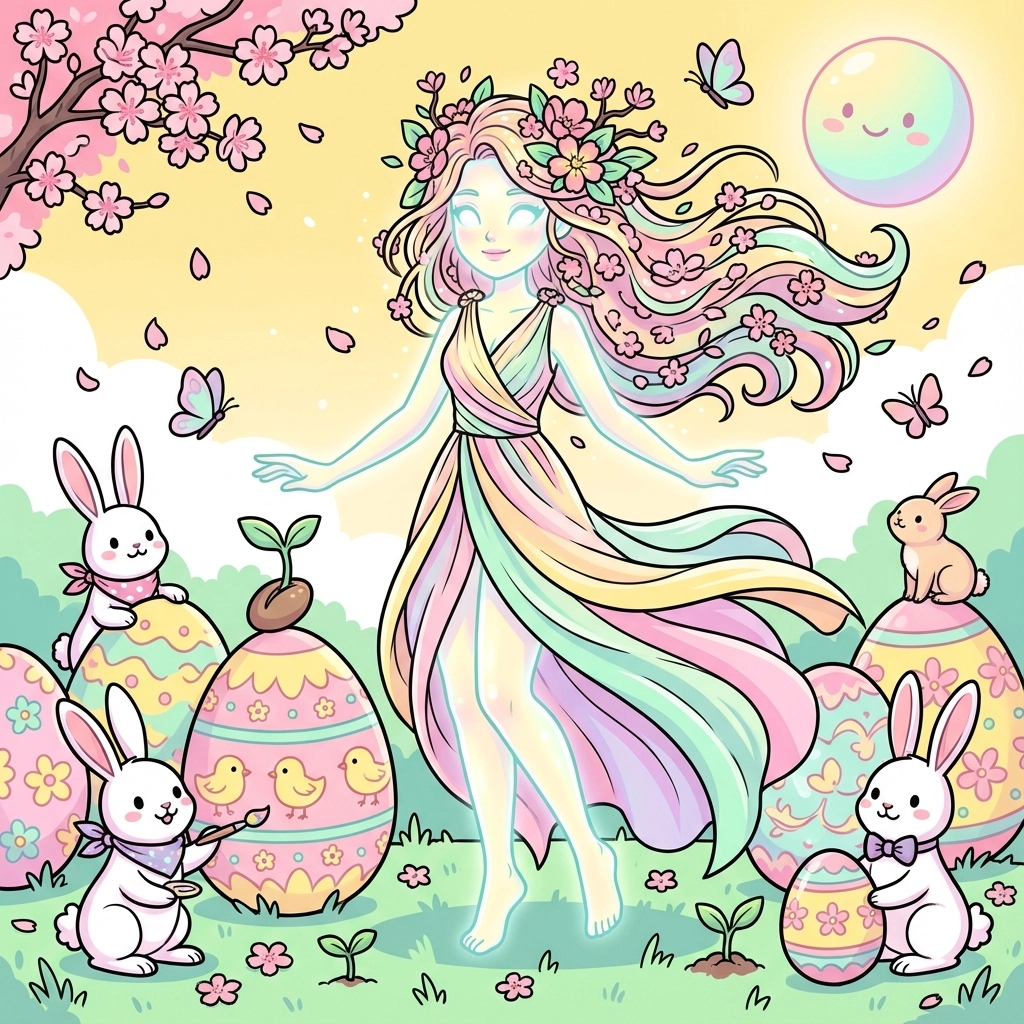
The name "Easter" likely comes from Eostre (Ostara), an Anglo-Saxon goddess of spring and dawn. Bede mentions “Eosturmonath” as April, but there’s debate whether she was widely worshipped or just a local figure. The spring symbolism—eggs and rabbits—is undeniable, celebrated across Europe pre-Christianity. Eggs marked rebirth in Persian, Egyptian, and Christian traditions. Rabbits and hares are obvious fertility symbols. The German “Osterhase” shows up by the 17th century. So your chocolate bunny? That’s a fertility symbol with mythic roots.
Christmas: The Great December Mash-Up
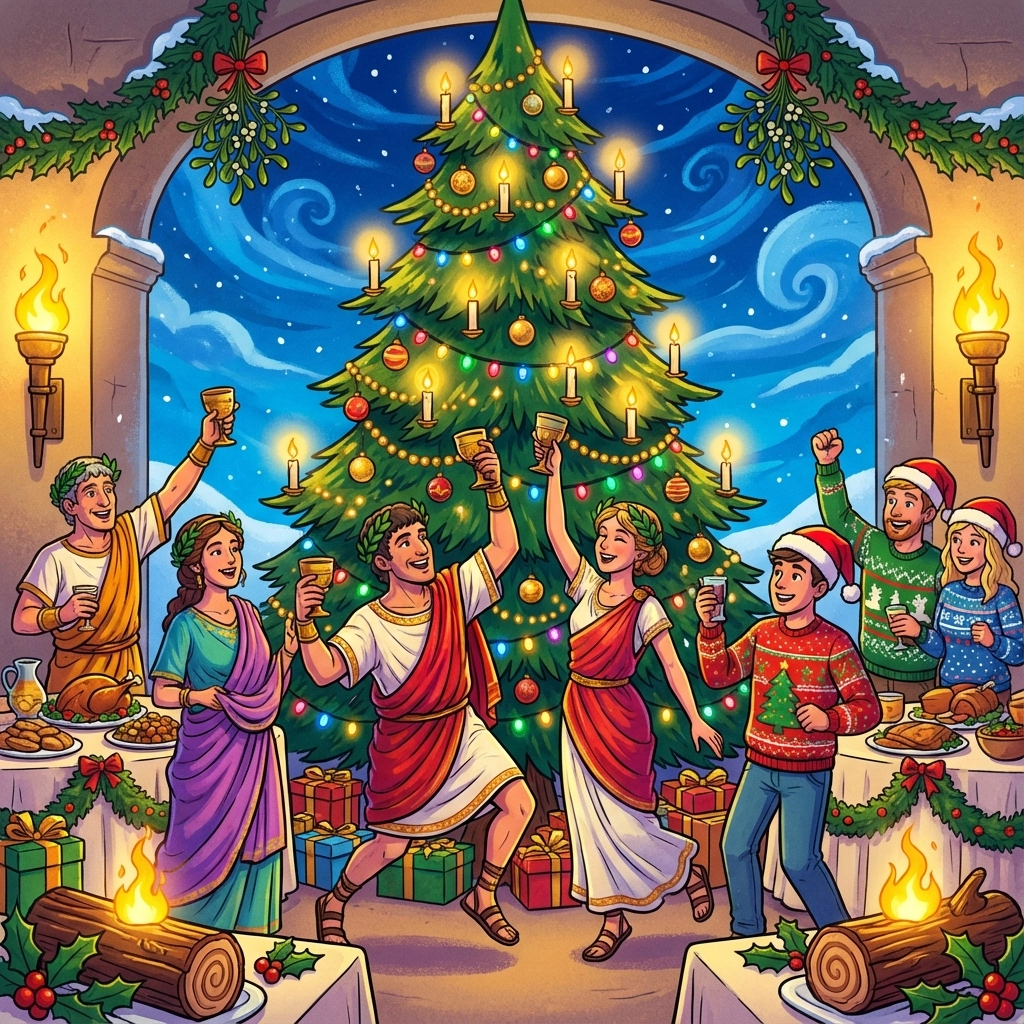
December 25th as Christmas is hotly debated. Some argue it's the result of theological timeline math; others say it's a strategic merge with Roman festivals like Saturnalia (Dec 17-23) and Sol Invictus (Dec 25). Either way, Saturnalia was a weeklong party with reversed social hierarchies, gifts, and lots of revelry—a proto office Christmas party, if you will.
Yule, the Norse 12-day solstice festival, brought us fires, evergreen decorations, and arguably the Twelve Days of Christmas. Holly and mistletoe stayed green and were considered magical. Mistletoe was sacred to Druids and in Norse myth, was the weapon that killed Baldur but also the source of kisses and reconciliation (thanks, Frigg!).
Reindeer, Thunder, and the Yule Goat (Why Donner and Blitzen Sound Like a Storm)
“Donner” and “Blitzen” literally mean thunder and lightning in German. Thor’s chariot (pulled by goats) and Odin’s Wild Hunt both fly through winter storms. Reindeer come from northern European realities and local folklore. The thunder names and goat/reindeer swap are how traditions morph—but the mythic origins rumble underneath.
Elves Didn’t Start in a Toy Factory (Tomte, Brownies, and Workshop Mythology)
Santa’s workshop elves are a modern invention. In older folklore, household spirits like tomte or nisse in Scandinavia, and brownies in England, did chores if respected but acted up if snubbed. The helpful labor spirit blends straight into the cheerful elf crew we imagine today—but their roots are much older, and a little more mischievous.
Trees, Wreaths, and Solstice Fire (Evergreen Magic, Rewired)
Evergreens symbolize survival in winter. The Christmas tree shows up in early-modern Germany, but the instinct is older: to celebrate persistent green and circle life. Holly, ivy, and wreaths are all ancient symbols refashioned for new religious meaning. The Yule log—once a massive communal bonfire—became hearth-sized and central to the celebration of light in the darkest time.
Christmas lights trace back to Saturnalia’s wax tapers, Candlemas in medieval churches, and eventually electric bulbs. The urge to “push back the longest night” with light is timeless.
Yule vs. Saturnalia: Who Brought the Party?
Saturnalia was sanctioned chaos—role reversals, gifts, parties, and greenery. Yule was feasting, oath-making, and big fires with the Wild Hunt overhead. Gift-giving migrated from St. Nicholas Day to Christmas and Epiphany. Wassailing, originally a fertility rite, evolved into caroling. Christmas isn't a counterfeit; it’s a meaning aggregator that reforges familiar customs for new purposes.
Beyond December: Halloween, All Saints, Candlemas (and Groundhog Day, kinda)
Halloween ties to Samhain and ancestor veneration. All Saints’ and All Souls’ map onto late-autumn festivals. Candlemas falls near Imbolc (spring’s first stirrings), and its weather lore migrates into Groundhog Day. La Befana in Italy connects Epiphany to older gift-bringer lore. It’s not a theft—it’s tradition layering itself to fit new faiths and communities while keeping the year’s rhythm intact.
The Strategic Genius of Religious Syncretism
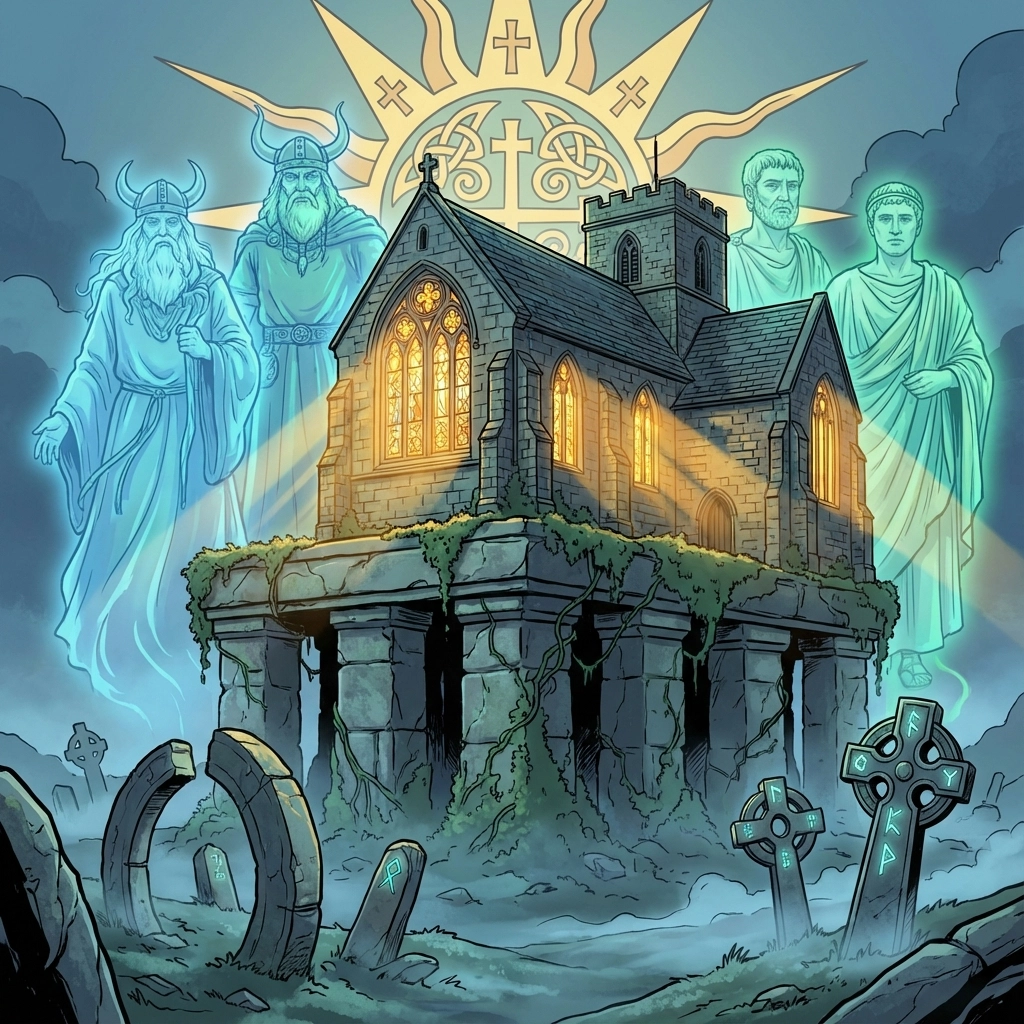
Pope Gregory I’s famous advice was to adapt pagan festivals, not destroy them. That’s how All Saints’ absorbed Samhain, and why Epiphany’s wassailing has ancient fertility roots. The early Church knew the power of familiar calendars and rhythms—hence the patchwork we celebrate today.
The Modern Echoes (And Why This Still Matters)
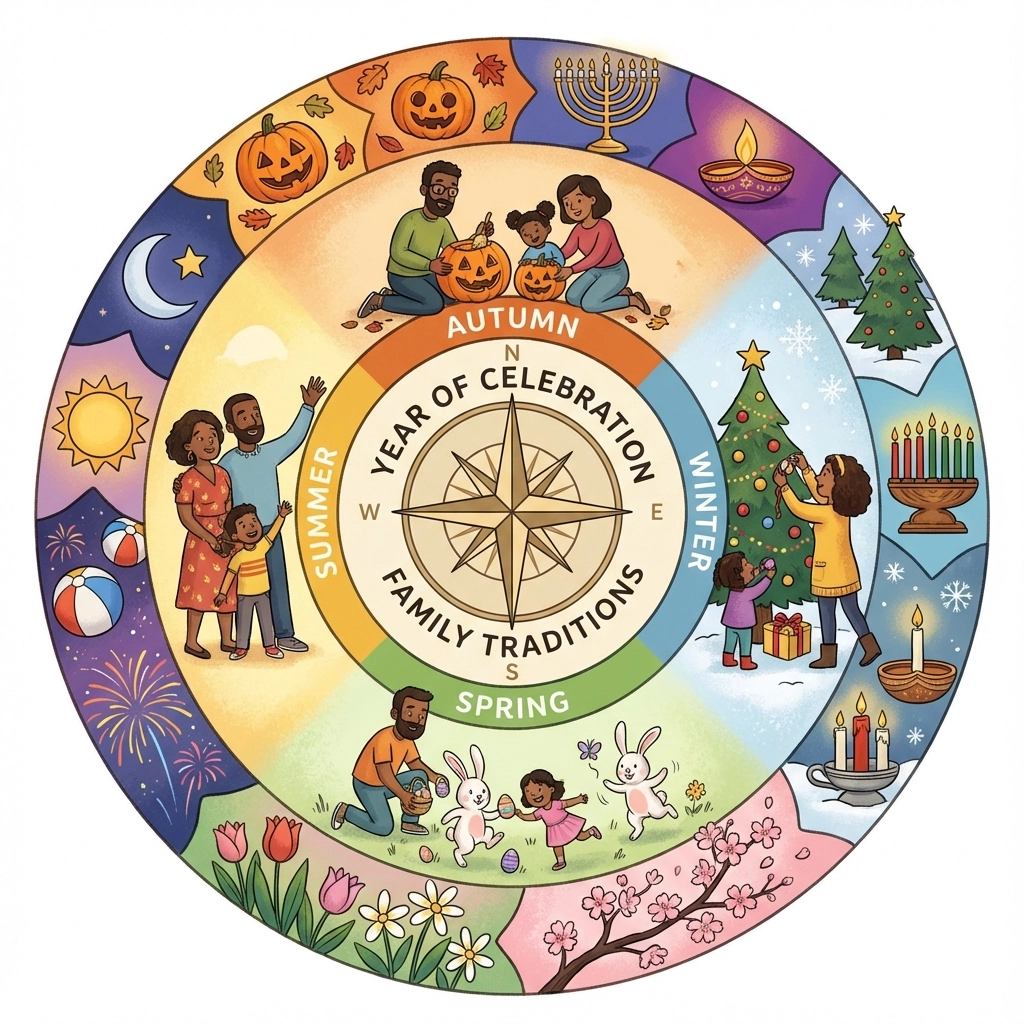
Whether it’s biting a chocolate bunny or lighting Advent candles, these holidays connect us to centuries of humans celebrating life, light, and renewal. Pagan, Christian, or in between—it’s all about marking the turning seasons, hope in darkness, and the promise that spring will return. That’s real magic, whatever you call it.
Notes, Disclaimers, and Sources
- Documentary transcript: “A Very Pagan Christmas: A History of Christmas” (2024), Post Apocalypse. Full transcript via YT Scribe. Covers Saturnalia, Yule, solstice fires, evergreens, Yule log, candles/lights, Odin/Santa, Krampus, La Befana, Perchta, wassailing, and syncretism. Mixes scholarly sources with folklore; debated claims are flagged.
- Odin/Santa, thunder names: Santa emerges from St. Nicholas/Sinterklaas/Father Christmas and American media. Donner & Blitzen mean thunder/lightning. Wild Hunt influence plausible, but debated. Sources: Encyclopaedia Britannica (Santa Claus), Moore’s “A Visit from St. Nicholas,” Thomas Nast’s Santa, Ronald Hutton, Wikipedia.
- Eostre/Easter name: Bede (8th c.) is core source. Debate on regional cult vs. etymology. Most European languages relate Easter to Passover, not Eostre. Sources: Bede, Philip Shaw, Ronald Hutton, Encyclopaedia Britannica, Wikipedia.
- Eggs, hares, and bunnies: Spring/rebirth symbols across cultures. German “Osterhase” recounted since 17th c. Sources: Encyclopaedia Britannica, Oxford Reference, Hutton, Wikipedia.
- December 25, Saturnalia, Sol Invictus: Two theories—calculation vs. festival blending. No universal consensus. Sources: Andrew McGowan, Steven Hijmans, Talley, Macrobius, Encyclopaedia Britannica, Wikipedia.
- Yule & Twelve Days: Timing/thematic overlap, but no exact inheritance. Sources: Ronald Hutton, Oxford Reference, Wikipedia.
- Trees, holly, ivy, wreaths: Evergreens predate Christianity; Christmas tree is early-modern German, holly and ivy roman/winter symbols, Advent wreath 19th c. German Protestant. Sources: Encyclopaedia Britannica, British Museum, Smithsonian, Wikipedia, Euronews, CBS News.
- Mistletoe & the kiss: Celtic & Norse myth; English kissing custom from early modern period. Direct Norse connection debated. Sources: Aldhouse-Green, Britannica, Hutton, Wikipedia.
- Candles & Christmas lights: Saturnalia wax tapers, Candlemas, tree lights. Martin Luther story likely apocryphal; electric lights 1882 NY. Sources: Britannica, History Today, Wikipedia.
- Elves, tomte/nisse, brownies: Helpful household spirits are ancient; workshop elves are modern. Sources: Nast, Moore, Britannica, Wikipedia.
- Krampus, La Befana, Perchta: Regional blends of old winter visitors with Christian feasts. Sources: Britannica, Smithsonian, Wikipedia.
- Wassailing: Orchard and house-to-house New Year/Epiphany rites. Sources: Folk Dance Society, Hutton, Wikipedia.
- Pope Gregory I’s letter: Advice to adapt, not abolish. Sources: Bede, Fordham Sourcebook.
- All Saints’ & Samhain: Alignment plausible, causation debated. Sources: Hutton, Britannica, Wikipedia.
- Where evidence is thin or claims are speculative (Eostre’s hare, Amanita muscaria reindeer, Odin/Santa equivalence), this is noted. Wikipedia used for summary/context; academic/journalistic sources for substance. CBS News, Euronews for accessible overviews.
- Supplemental references: History Cooperative, Christianity.com, Through Eternity, History For Atheists, Come Reason, Parker Villas, Catholic.com